The times we are currently living have made me realise that sport is a very small part of daily life and a part I will never take for granted ever again. For someone whose life revolves around sport through covering Rugby for BT Sport as a researcher with the production company Sunset & Vine, to watching various others during the weekend if I am not working. But I do find time during the week to catch up on anything I might have missed that is of major importance to me.
The current crisis has allowed me to spend time redesigning this website and make it a more professional example of what I can produce in print form. As well as showcase the content in a more slick and adept way. All this has allowed me to renew my profound passion, for not only watching sport, but writing about it as well.
The coronavirus crisis has meant that production companies and broadcasters have had to be innovative in the ways they have produced fresh and unique content for their viewers. This is mainly through the use of technology in order to comply with the social distancing guidelines. As the restrictions have further tightened, the broadcasters have had to lean on their extensive archives in order to fill the ‘airtime’. Taking all of what I’ve said into account, how am I getting my sports fix during these unprecedented times I hear you ask; I’ll tell you. Warning, the following may contain spoilers or detailed recounts of the end of events:
Edgbaston 7th August 2005
Shortly after my 7th birthday England beat Australia at Edgbaston in what is regarded as one of the greatest test matches in history and truly gripped the hearts and minds of the British public. Australia began day four on 175 for eight, 107 runs short of their target of 282. Shane Warne and Brett Lee were at the crease, and early on it was clear that the Aussies were not going to go down with a fight. It was believed that if the Australians were to stand any chance of victory Michael Clarke would have to be there on the fourth morning. This was not going to be the case as Steve Harmison produced a masterstroke of a slower ball to dismiss Clarke late on the previous evening.
Enter Warne and Lee, who like many others throughout the test perhaps gave us a glimpse into the future of higher scoring rates in the longest form of the game. The two showed aggressive intent from the off and with this approach the required total came down rapidly. The Australians resistance halted as Warne, in extraordinary circumstances, stood on his stumps to depart on 42. Michael Kasprowicz joined Lee with 62 still required for an unlikely victory. Both ‘tailenders’ continued to show stoic defiance and take the attack to the English bowling. Michael Vaughan, England’s captain gave Andrew ‘Freddie’ Flintoff an extended spell in the attack which in other circumstances would be deemed risky given the quick turnaround before the next test.
However, as England were pushing for victory this was considered necessary given the test match Flintoff was having. As was becoming the evermore desperation of Vaughan in search of victory gave a one over break to Flintoff but brought him back on from the opposite end in the 60th over. The required runs passed through the teens and into single figures and with it the panic of the crowd was elevated. Steve Harmison produced the crucial ball in the 65th over which ended Kasprowicz’s defiance and with it began rapturous celebrations from the English fielders as they swarmed Harmison.
[getty src=”53335867″ width=”594″ height=”473″ tld=”co.uk”] [getty src=”53335770″ width=”594″ height=”429″ tld=”co.uk”]Having been in the early stages of my love affair with cricket when this game was originally played, rewatching Edgbaston ’05 back has allowed me to really appreciate the tension and dramatic theatre that unfolded. I also now admire how much cricket has changed in the 15 years since this game was played.
Cricket World Cup 2019 Final Lords, England v New Zealand 14th July 2019
After a pulsating 50 overs for each team they could not be separated each scoring 241 runs. England’s pursuit was spearheaded by Ben Stokes and Jos Buttler who recovered the innings from 86 for four to 196 for five to set England back on track to chase the 242 runs needed to win the World Cup. But wickets fell at regular intervals and it appeared as if Stokes was going to run out of partners. He would have been dismissed had Trent Boult not stood on the boundary padding before throwing the ball back in to Martin Guptill which was subsequently awarded six. Another instance saw Stokes diving to make his ground meant that the ball being thrown in from the deep collided with his bat and race away to the boundary for four and as they had already run two this was also awarded six.
[getty src=”1172500362″ width=”594″ height=”385″ tld=”co.uk”]Fast forward to the ‘super over’ as a result of the tie and with the rules quickly explained to both captains and the crowd, people began to wonder who would come out to bat for either side and who would bowl the respective overs. After two hours and 27 minutes at the crease it was the Durham native of Kiwi descent who emerged alongside Buttler. The pair managed to score 15 runs from their six deliveries. England’s newbie Jofra Archer fast tracked into international cricket in time for the World Cup was tasked with the pressure of bowling the over. The ‘super over’ demonstrated that professional sportsmen are human as Archer began the over by bowling a wide, Jason Roy misfielded the ball in the outfield to allow Guptill and Jimmy Neesham to run two piling additional pressure onto Archer. When you make a mistake in cricket the ball follows you and it was once again down to Roy only this time, he fielded the ball, threw it into Buttler quick enough for him to remove the bails before Guptill could make his ground and secure World Cup glory.
[getty src=”1172498884″ width=”594″ height=”368″ tld=”co.uk”]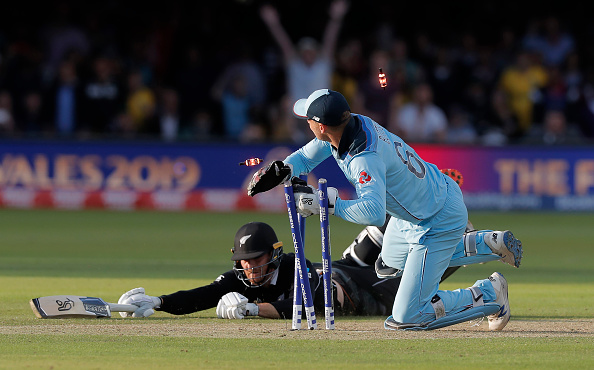
This day in July 201This day in July 2019 is one I will remember for the rest of my life and one I will certainly tell my children and grandchildren about. I did not move from my seat in my living room all day and was gripped throughout and wrestled with the emotional rollercoaster that came with it.
Ashes 3rd Test, Headingley England v Australia 25th August 2019
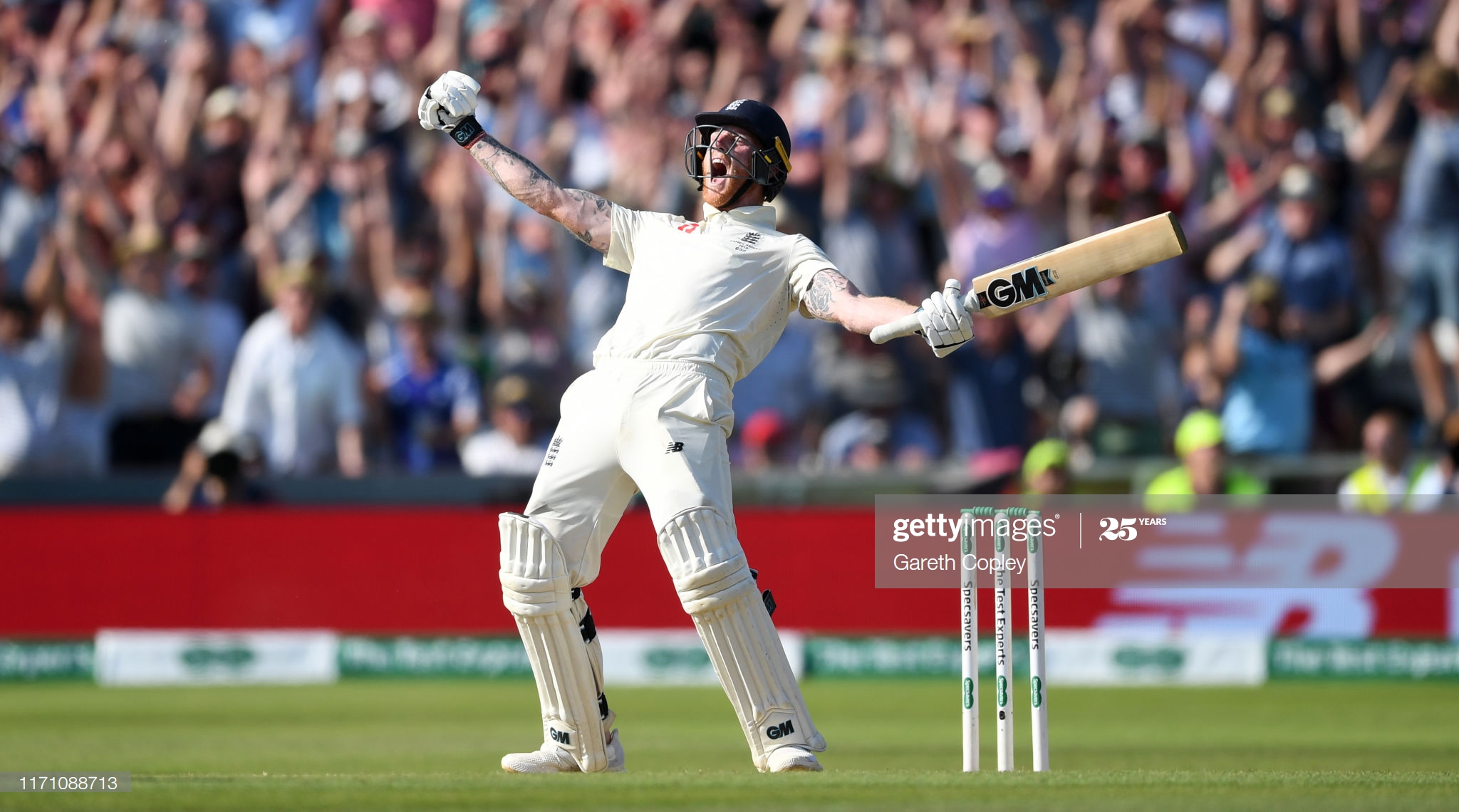
Six weeks after his World Cup heroics, Ben Stokes was once again at the forefront of what seemed like a near impossible task in securing another win for England. Stokes ending day three on 2* off 50 balls showed a gritty resilience and was crucial in keeping England in the game after being bowled out for 67 in the first innings which I was there for. Safe to say not one of my favourite experiences of watching England play. Especially as I was there at Trent Bridge when they regained the Ashes in 2015.
When number 11, Jack Leach, came to the crease with England still requiring 73 more to win people weren’t holding out much hope or so they thought. Stokes unleashed a mass bludgeoning attack on the Australian bowlers, hitting 11 fours and eight sixes on his way to 135*, the last of his 11 fours sealing the win as he crunched the ball through the off side sending the Western Terrace and indeed the whole of Headingley into raucous party mode. This may have been the winning runs, but it was the ball before which will be remembered as fondly with Leach nudging the ball past short leg and with it, they scamper through for a single.
[getty src=”1177166408″ width=”594″ height=”380″ tld=”co.uk”] [getty src=”1177167766″ width=”409″ height=”594″ tld=”co.uk”]Stokes’ heroics were incredible and combStokes’ heroics were incredible and combined traditional test match batting, highlighted by his dogged approach at the end of the third day and his switch to dominating the bowlers as he pushed for victory with Leach at the other hand. England’s victory was aided by Australia showing nerves under pressure with Marcus Harris’ dropped catch and Nathan Lyon’s miss run out opportunity. All of this in mind, like Edgbaston in 2005, it will be a test match that will live long in the memory.
Miracle at Medinah Ryder Cup 2012 Chicago, Illinois
It was late on Saturday 29th September when Ian Poulter came alive in the fourballs on a day when the US firmly dominated. Poulter embraced the spirit of Seve Ballersteros, who sadly passed away in May 2011, and was a close friend and successful partner in the Ryder Cup of European captain José María Olazábal. The ‘postman’ as he is affectionately known when it comes to the Ryder Cup was on electrifying form as he produced five birdies to allow Europe to only trail 10-6 heading into the Sunday singles leaving them the unlikely task of winning eight of the 12 matches to retain the Cup.
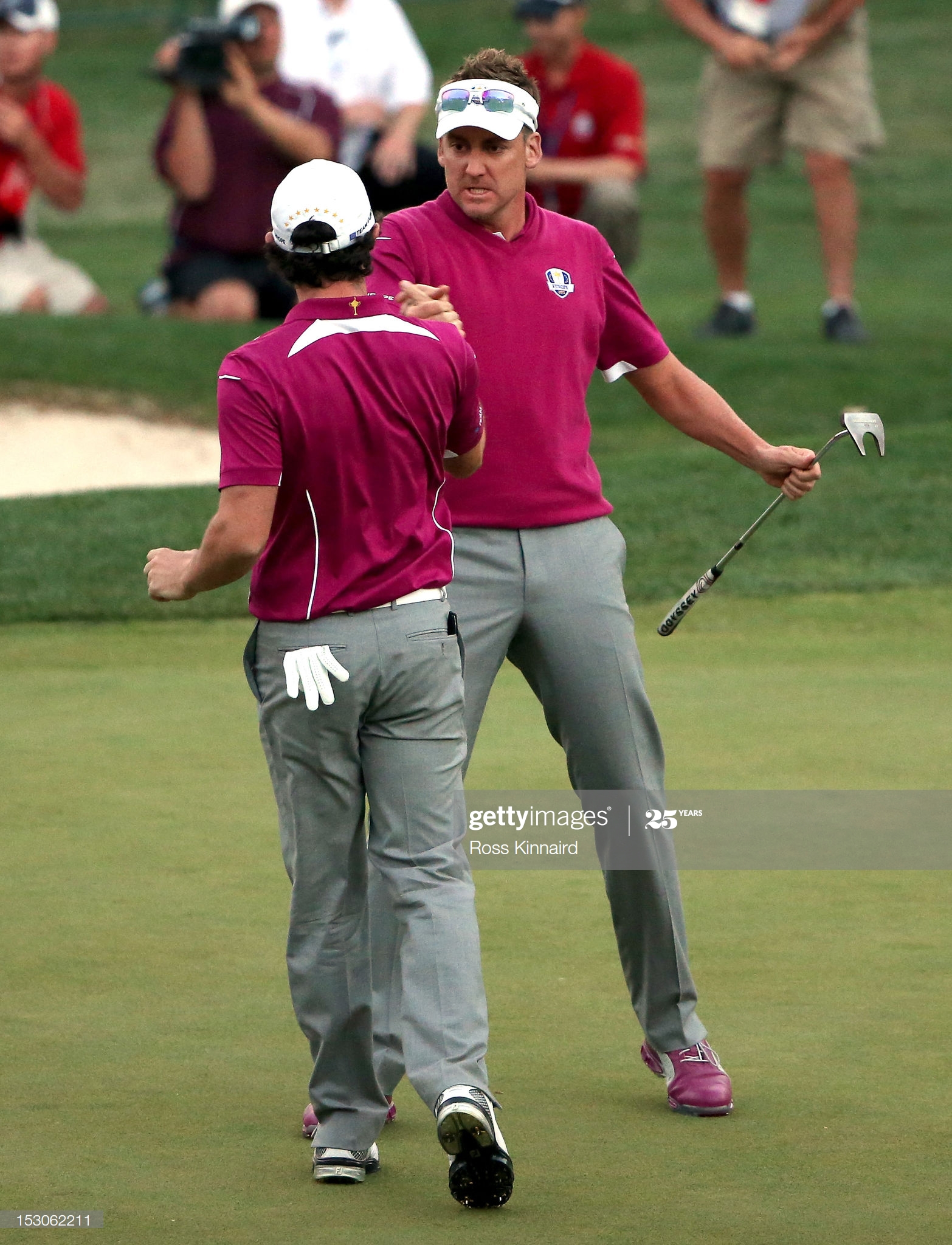
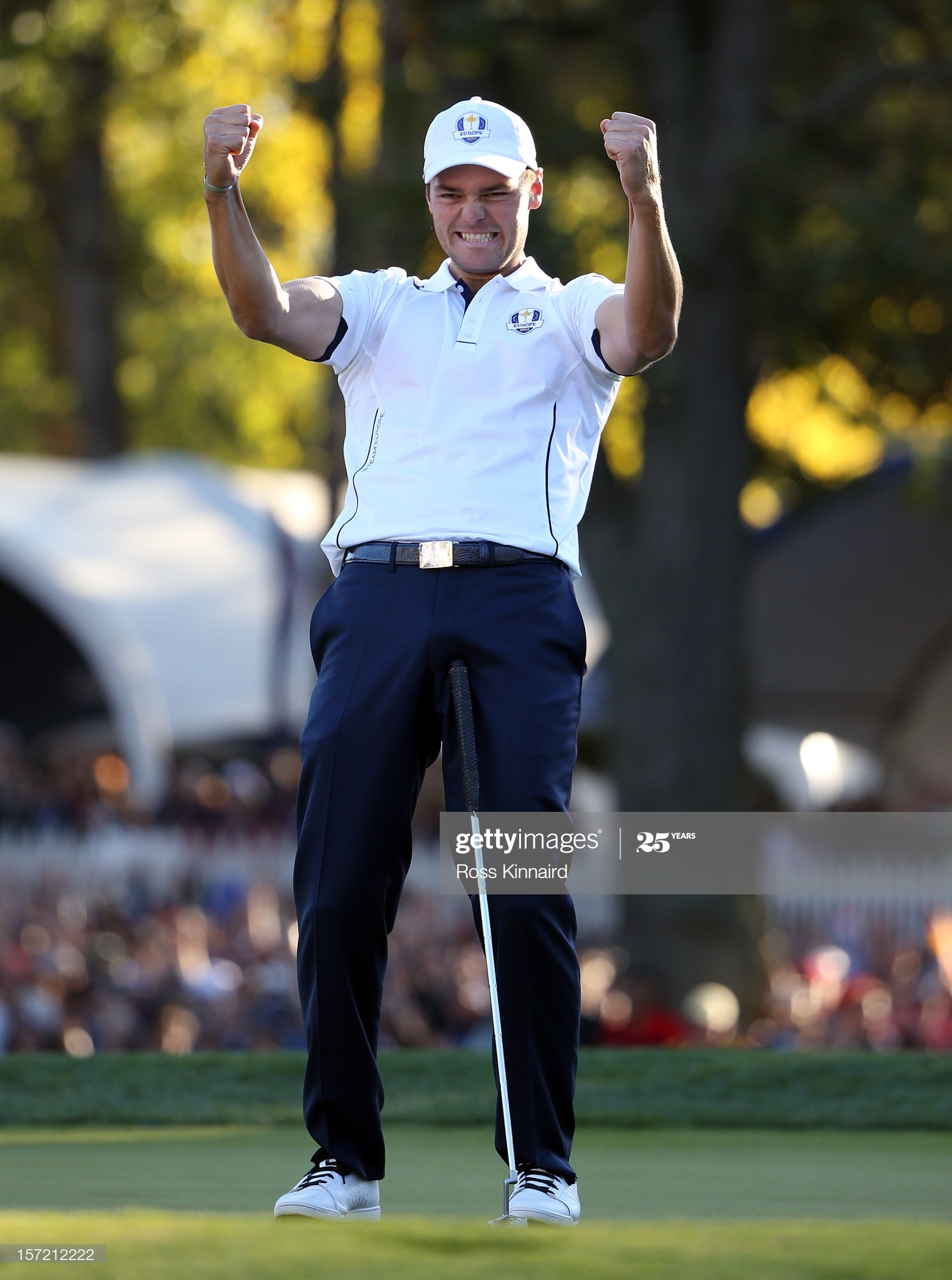
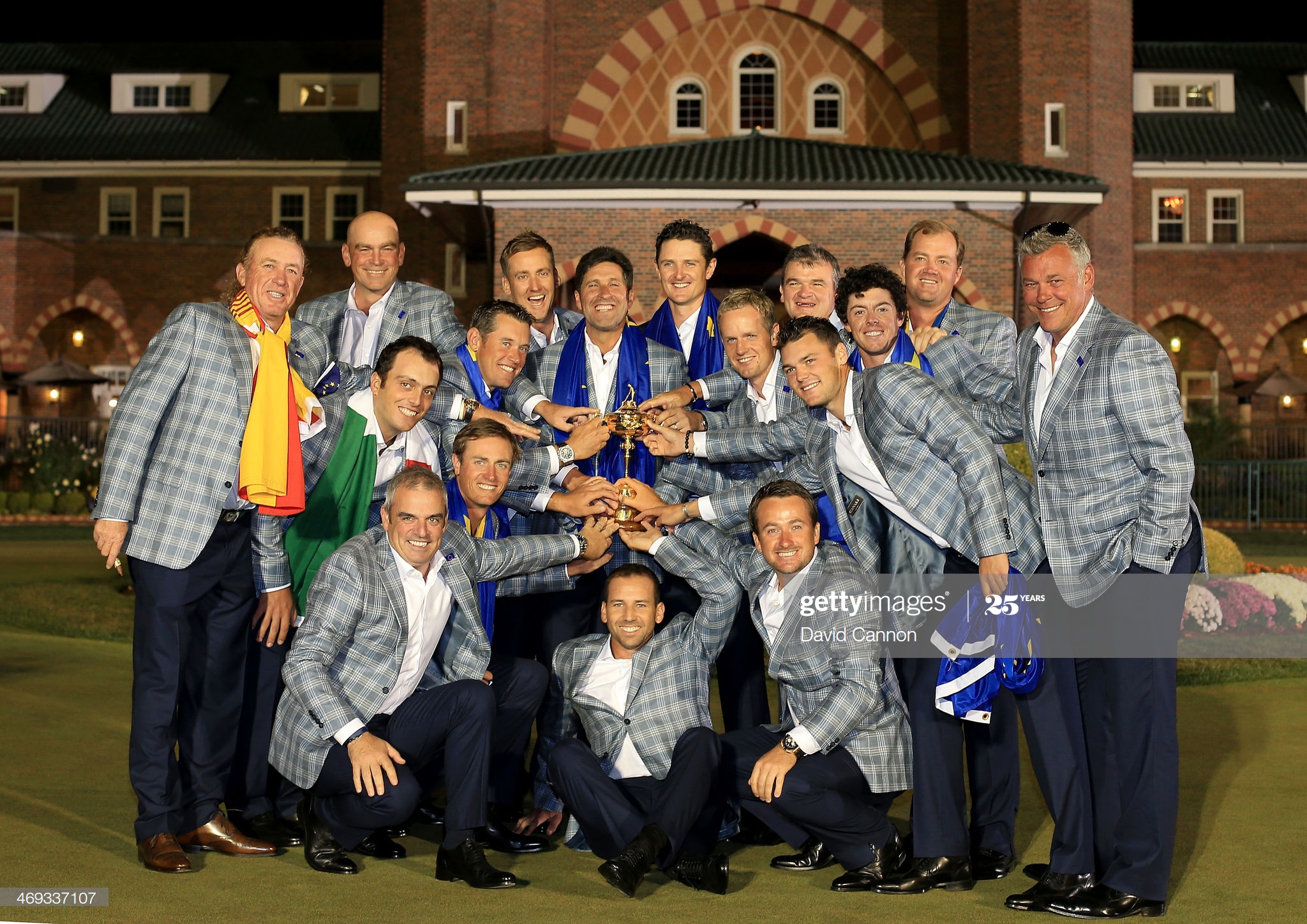
Martin Kaymer holed the winning putt against Steve Stricker in the setting autumn evening in Chicago to pull off what is now regarded as the greatest Ryder Cup comeback in history and as the “Miracle of Medinah”.
As well as these sporting events I have looked at in greater detail I have also rewatched the 2014 Ryder Cup at Gleneagles in Scotland and the British & Irish Lions 2009 tour to South Africa-Living with the Pride. My sporting fix has also been in the form of books as I have read the autobiographies of Jonny Bairstow, Alastair Cook & Sam Warburton.